You’ve got symptoms in what feels like every part of your body: fatigue, brain fog, aching muscles, a gut that won’t settle, headaches, poor sleep, new reactions to smells and chemicals. Each specialist looks at their piece and finds nothing much wrong. What ties it together may be an immune system that switched on in response to a threat and never switched back off, with inflammation reaching into the nervous system. That pattern is called CIRS, and understanding it explains why treating each symptom separately so often gets nowhere.
What CIRS is
CIRS stands for chronic inflammatory response syndrome. The term was developed by Dr Ritchie Shoemaker, who described people developing symptoms across many body systems at once after living or working in water-damaged buildings.¹
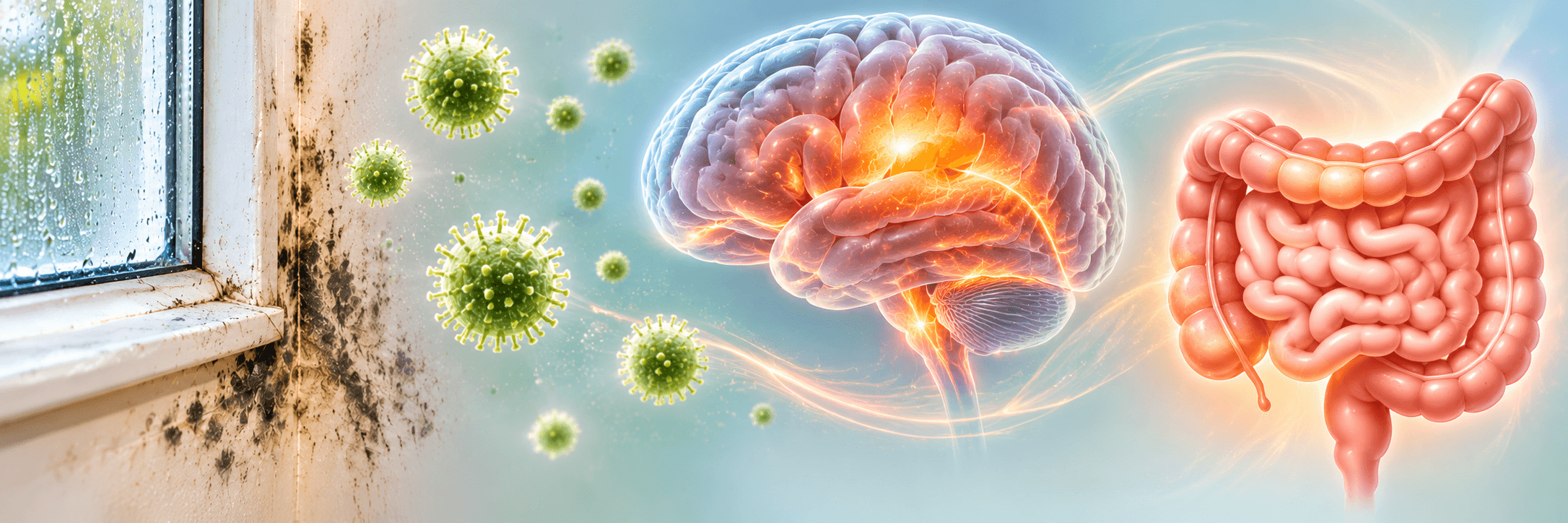
The way I see it, CIRS is broader than any single trigger. At its core, it’s inflammation of the nervous system, and many things can contribute to it. The common thread is an immune system that has sensed a threat, mounted a response, and then can’t stand down, either because the threat is still there or because the alarm itself has become self-sustaining.
That’s why CIRS sits so close to the cell danger response. When your cells sense an ongoing threat, they shift into a protective survival mode and stay there as long as the threat continues. I’ve explained that shift is your body stuck in survival mode?

What can trigger it
- Water-damaged buildings. This is the most common driver I see. The indoor air in these buildings carries a complex mix of mould, mould toxins (mycotoxins), bacteria, bacterial toxins and fragments of all of these.¹ I’ve written about this in detail in can mould in your home make you chronically ill?
- Tick-borne infections, such as Lyme disease and related infections.
- Other chronic or lingering infections that keep the immune system on alert.
- Other toxic exposures that add to the overall inflammatory load.
Often it isn’t one thing. Several exposures and stressors stack up until the body tips over.
Why one person gets sick and another doesn’t
CIRS rarely affects everyone exposed equally. One person in a household may be bedridden while their partner only has a blocked nose.
Part of the answer lies in genes. Dr Shoemaker linked susceptibility to particular types of HLA-DR and HLA-DQ immune genes, the same gene family involved in coeliac disease. These gene types appear to make it harder for the immune system to recognise biotoxins and tag them for removal, so they keep circulating, and the more of them a person carries, the higher the risk. If someone also carries variants that slow key antioxidant and detoxification systems, such as superoxide dismutase (SOD) and glutathione, clearing these toxins becomes harder still.
I’m cautious about putting too much on genes, though. Reducing CIRS to a set of genes would miss the point. In practice, total load matters just as much: someone already dealing with gut problems, sluggish bile flow, nutrient shortfalls or other infections tends to tip over sooner, because their system has less room to absorb one more burden.
Signs and symptoms
People with CIRS typically have symptoms across many body systems at once. In Dr Shoemaker’s work, people averaged more than 20 symptoms each.¹ Common ones include:
- Fatigue and weakness, especially after effort
- Brain fog, poor concentration, memory and word-finding problems
- Headaches and light sensitivity
- Sinus problems, cough or shortness of breath
- Muscle aches, cramps and joint pain
- Numbness, tingling or unusual nerve sensations
- Bloating, abdominal pain, diarrhoea or food reactions
- Excessive thirst and frequent urination
- Trouble regulating temperature, or night sweats
- Mood swings, anxiety, low mood and poor sleep
- New sensitivity to smells, chemicals and medications
Inflammation that reaches the brain
This is what sets CIRS apart from ordinary inflammation. The nervous system is involved, and that explains why so many of the symptoms are neurological and emotional.
Your sense of smell runs directly into the brain. The olfactory bulb sits just above your nasal cavity and sends nerve endings down into your nose, and it connects to brain areas involved in memory, emotion and hormone regulation. My view is that breathing in toxin-laden air irritates these nerve endings and sends disordered signals further into the brain.
Some fungal toxins act as ionophores. They slip into the fatty layer of cell membranes and form tiny channels that let charged particles leak across, changing how cells, including nerve and muscle cells, behave without killing them outright.² Toxins and the inflammatory messengers they trigger can also make the barrier between the blood and the brain leakier. The result is an inflamed brain, felt as brain fog, poor memory, mood swings, anxiety, low mood, headaches and disturbed sleep.
Brain imaging supports this. In people with CIRS from water-damaged buildings, volume scans showed a smaller caudate nucleus on both sides, along with enlargement of some other brain regions, compared with people without the illness.³ The caudate nucleus is involved in planning and directing movement, working memory, learning, goal-directed behaviour and deep sleep, which fits many of the symptoms people describe.
Why the gut won’t heal while the trigger remains
This is one of the most important patterns I see in clinic. People come in with long-standing digestive problems: bloating, pain, loose stools, food reactions, histamine flares, recurring yeast or bacterial overgrowth. They’ve done the elimination diets, the gut protocols and the probiotics. Things improve for a while and then slide back. In my clinical experience, when that keeps happening, a mould exposure the person isn’t aware of is often the missing piece.
- Mycotoxins damage the gut lining. Several mycotoxins weaken the tight junctions that seal the cells lining your gut, which lets more bacterial fragments and undigested food through and activates the immune system.⁴
- They shift your gut bacteria. Mycotoxins tend to reduce beneficial bacteria and favour more harmful ones.⁵ A healthy gut microbiome is also one of the ways your body breaks down and clears mycotoxins, so the damage can feed itself.⁵
- Toxins keep circulating through bile. Your liver sends many toxins out in bile, but much of that bile is reabsorbed further down the gut and returned to the liver. When people in Dr Shoemaker’s study were given a prescription medication that binds bile and stops that recycling, their symptoms improved markedly within two weeks. When they spent just three days back in their water-damaged buildings without it, every one of them relapsed.¹ That makes bile flow central. I’ve explained why in the signs of sluggish bile.
- Mast cells and histamine get involved. An inflamed gut often becomes reactive to more and more foods, a pattern I’ve written about in why am I reacting to more and more foods?
If the exposure is still there, the gut is being re-damaged every day. That’s why gut work alone so often stalls.

What the toxins do inside your cells
Ochratoxin A, one of the common mould toxins, inhibits mitochondrial energy production, damages cell membranes through oxidation and disrupts how cells handle calcium.⁶ Those are exactly the pathways I’ve described in what mitochondrial dysfunction actually means and how calcium switches your mitochondria on and off. It helps explain the fatigue, the crashes after effort and the brain fog.
Many people with CIRS also become sensitive to perfumes, cleaning products, petrol and alcohol. When detoxification and antioxidant systems are already stretched, there’s less capacity left for anything else. I’ve explained one of the reasons in why you can’t tolerate alcohol or chemical smells.
In Australia, these illnesses have been recognised at a national level. In 2018, a parliamentary committee held an inquiry into biotoxin-related illnesses, including CIRS, and heard from many people living with them.⁷
The path to recovery
Recovery follows an order, and the order matters.
- Find and remove the trigger. For most people this means identifying and dealing with a water-damaged building, but it can also mean addressing an infection or another exposure. Nothing else works fully until this is done.
- Help the body clear what’s already there. Supporting bile flow, the gut and detoxification is how the body offloads what it has stored.
- Calm the inflammation and repair. Once the threat is gone and the load is falling, the gut, nervous system and mitochondria can begin to recover.
Doing these steps out of order is a common reason people feel worse. Pushing detoxification or energy support while the trigger is still there can stir things up without clearing them, which I’ve written about in why the right supplements can make you feel worse.
Where the history points that way, I use mould and biotoxin testing, mycotoxin testing and an organic acid test to understand what the body is dealing with. Recovery usually takes months rather than weeks, and it’s best done with a practitioner who understands CIRS.
Frequently asked questions
What is CIRS?
CIRS, or chronic inflammatory response syndrome, is a chronic, body-wide inflammatory illness that involves the nervous system. The immune system responds to a threat and doesn’t switch back off, producing symptoms across many body systems at once.
What causes CIRS?
The most common trigger is exposure to water-damaged buildings and the mould, mycotoxins and bacteria they contain. Tick-borne infections such as Lyme disease, other chronic infections and other toxic exposures can also contribute, and often several stack up together.
Is CIRS the same as mould illness?
Mould illness is the most common form of CIRS, but CIRS is broader. Any ongoing trigger that keeps the immune system and nervous system inflamed can produce the same pattern.
How does CIRS affect the brain?
Toxins and inflammatory messengers can reach the brain through the nose and through a leakier blood-brain barrier, causing brain fog, memory problems, mood changes and poor sleep. Brain scans of people with CIRS from water-damaged buildings have shown a smaller caudate nucleus.
Why does my gut keep relapsing?
If an exposure such as mould is still present, mycotoxins keep damaging the gut lining, disturbing gut bacteria and recirculating through bile. In my clinical experience, that’s a common reason gut treatment helps for a while and then stops working.
Can you recover from CIRS?
Yes, in most cases, but it takes time and needs to happen in order: remove the trigger first, then help the body clear the toxin load, then calm inflammation and repair.
References
1. Shoemaker RC, House DE. Sick building syndrome (SBS) and exposure to water-damaged buildings: time series study, clinical trial and mechanisms. Neurotoxicol Teratol. 2006;28(5):573-588. PMID 17010568.
2. Kamyar M, Rawnduzi P, Studenik CR, Kouri K, Lemmens-Gruber R. Investigation of the electrophysiological properties of enniatins. Arch Biochem Biophys. 2004;429(2):215-223. PMID 15313225.
3. Shoemaker RC, House D, Ryan JC. Structural brain abnormalities in patients with inflammatory illness acquired following exposure to water-damaged buildings: a volumetric MRI study using NeuroQuant. Neurotoxicol Teratol. 2014;45:18-26. PMID 24946038.
4. Akbari P, Braber S, Varasteh S, et al. The intestinal barrier as an emerging target in the toxicological assessment of mycotoxins. Arch Toxicol. 2017;91(3):1007-1029. PMID 27417439.
5. Liew WPP, Mohd-Redzwan S. Mycotoxin: its impact on gut health and microbiota. Front Cell Infect Microbiol. 2018;8:60. PMID 29535978.
6. Ringot D, Chango A, Schneider YJ, Larondelle Y. Toxicokinetics and toxicodynamics of ochratoxin A, an update. Chem Biol Interact. 2006;159(1):18-46. PMID 16293235.
7. House of Representatives Standing Committee on Health, Aged Care and Sport. Report on the Inquiry into Biotoxin-related Illnesses in Australia. Parliament of Australia; October 2018. https://www.aph.gov.au/Parliamentary_Business/Committees/House/Health_Aged_Care_and_Sport/BiotoxinIllnesses/Report